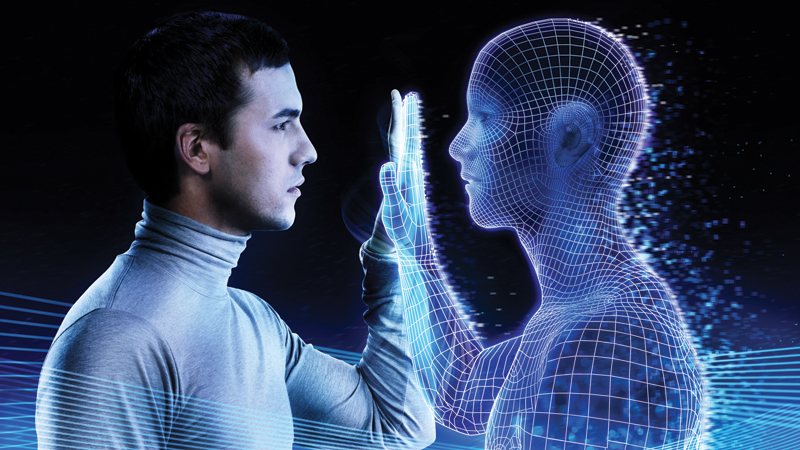
What it is and why it is the best tool we have to predict patient outcomes
(This is written for a non-data science audience since everyone can and should understand this. Hence a few simplifications have been made.)
The Question: What will happen to this patient in the future?
One of the most important question we answer with AI is to predict what will happen to a patient in the future I.e., predicted patient outcomes.Patient outcomes include disease onset, disease progression, hospitalizations, ER visits, costs and much more. By predicting this for each patient we are able to identity patients that at high risk and hence need the most care.
What interventions can result in better outcomes for this patient?
A secondary question we try to answer with AI is what interventions will lead a patient towards better outcomes than the predicted ones.
—————- This is where typical healthcare analytics starts ————————–
Question: Given a patient how can we predict what will happen to them in the future?
Current solution: Predict what will happen to an average patient in the population. Assume the same will happen to this given patient
Issue: Each patient is very unique so a given patient does not follow the trajectory of an average patient. For example, given a 65 year old with diabetes, what would be accuracy in them having the same outcomes as the average of all 65 year old diabetics. Not very high.
—————- This is where typical healthcare analytics stops ————————–
—————- This is where typical healthcare AI starts ————————–
Current solution: Categorize patients into cohorts or personas and predict that a given patient will follow the future of the average person in that cohort or personas
Issue: While a bit better, each patient is still too unique to follow the average. Even if you add more features like gender, socio-behavioral, full disease burden and more the reality is that the number of features that affects each patient’s outcomes is in many hundreds.
—————- This is where typical healthcare AI stops ————————–
—————- This is where AI digital twins approach starts ————————–
Better solution: Find a set of digital twins of a given patient.
Issue: But then we don’t know what will happen to those digital twins in the future
Almost full solution: Set the clock back by 2 years (less or more depending on the outcome you’re trying to predict). Find digital twins who two years ago were in the same situation as the given patient is in now. Predict that the given patient will follow what happened to those digital twins in the past two years.
——– At this point you can predict the outcomes with good accuracy —————-
Issue: How do we then predict the intervention that would improve the outcome for the given patient. Those digital twins could have taken different actions in the past two years. For example, one digital twin could have gotten a flu vaccine while the other did not.
Final solution: Separate the digital twins into two sets: Set A has digital twins that had good outcomes while Set B has digital twins that had bad outcomes. (This is a simplification since we can use probability instead of a hard classification here). Now analyze their actions in the past two years to identify which actions correlate highly with set A and not with set B. These are the actions that will most likely result in the desired outcome for a given patient.
——- Now you can predict the interventions that will result in better outcomes ——
In the future I’ll write how you can achieve this in AI and how GenAI like ChatGPT make this process better so feel free to follow if you’re interested.
In AI, we don’t need your digital twins to be real. We can create synthetic digital twins that are a combination of multiple real digital twins but I’ll write about that separately.